Lesson 18: Letter Waw (Shape 1)
Letter Waw (Shape 1)
Introduction
In this lesson, you will learn how to write the Arabic letter Waw in its first form using the Thuluth calligraphy style.
Waw Shape 1 is a graceful and expressive letter that blends short vertical foundations with a long flowing curved body. It trains students to control symmetry, smooth diagonal movement, and elegant finishing curves. Mastering this form strengthens rhythm, balance, and artistic continuity in Thuluth writing.
Letter Data
- Letter: Waw
- Script: Thuluth
- Shape: 1
- Total strokes: 4
- Pen angle: 70°–90°
- Total length: Based on nuqta measurements
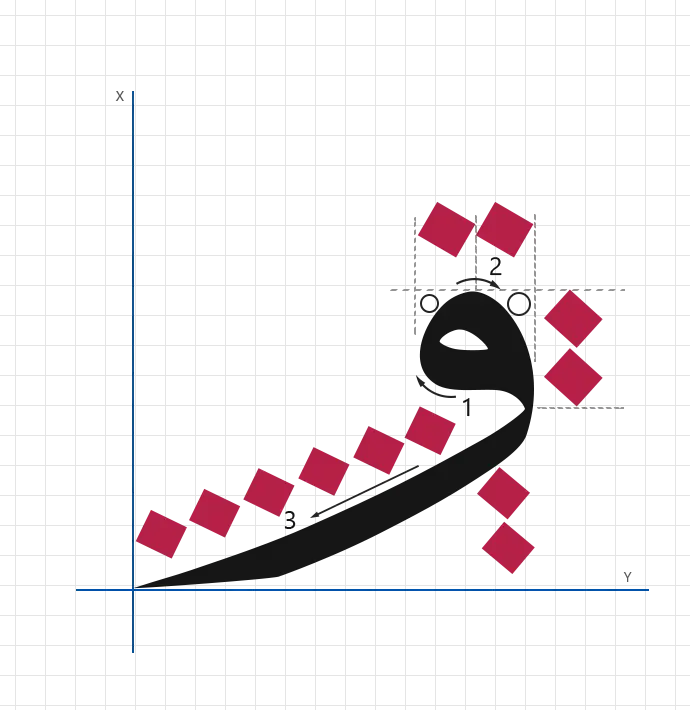
Stroke Details
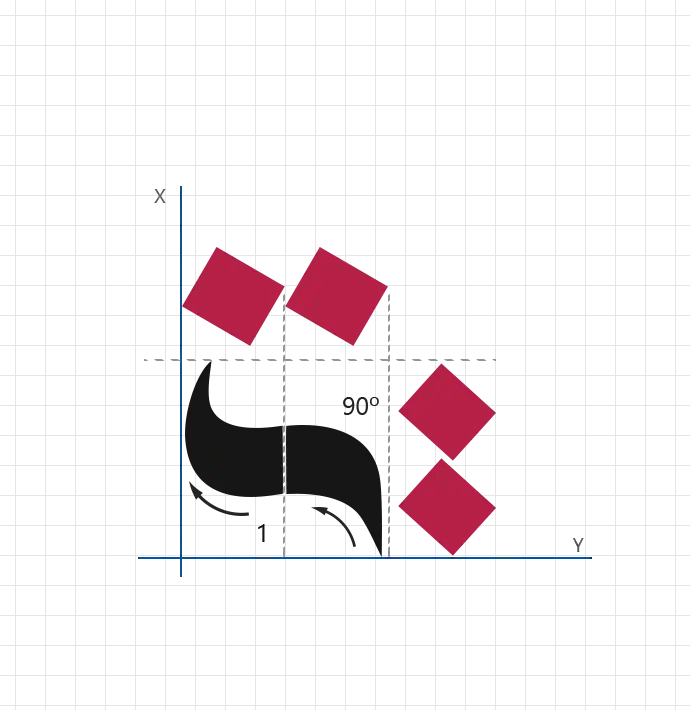
Stroke 1:
- angle: 90°
- direction: Downward vertical
- length: 2 nuqtas (height)
- width: 2 nuqtas
- pressure: Medium and steady
- description: Draw a short vertical stroke to establish the first structural base of the letter.
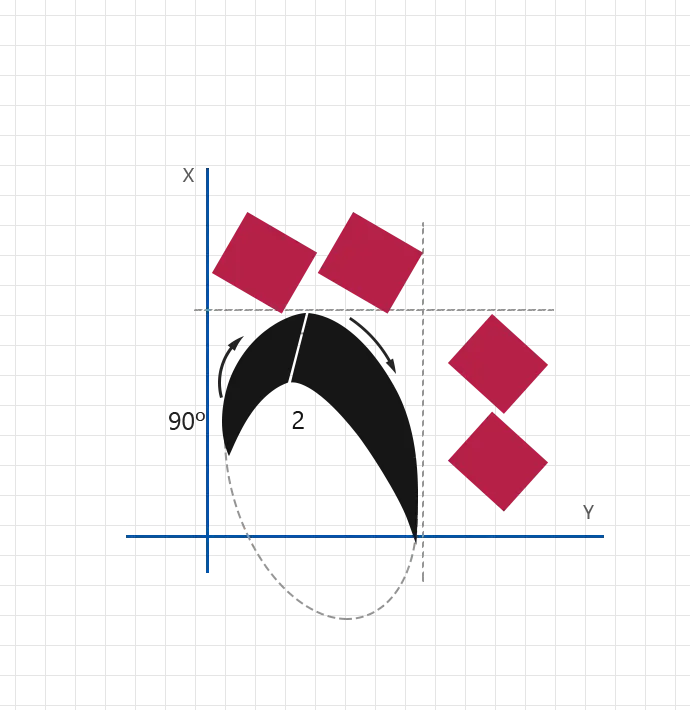
Stroke 2:
- angle: 90°
- direction: Downward vertical
- length: 2 nuqtas (height)
- width: 2 nuqtas
- pressure: Medium
- description: Draw a second vertical stroke beside the first to create symmetry and reinforce the foundation.
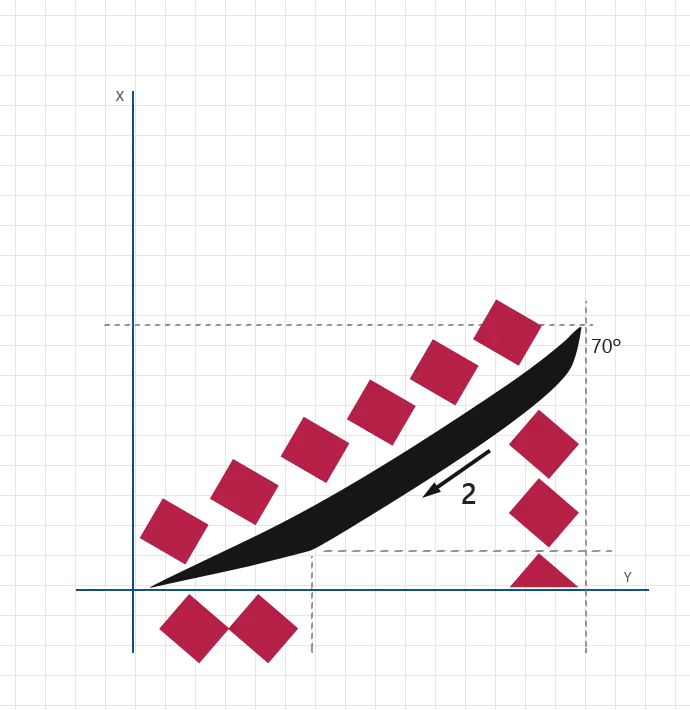
Stroke 3:
- angle: 70°
- direction: Diagonal downward curve
- length: 6 nuqtas (height)
- width: 2.5 nuqtas
- pressure: Medium and controlled
- description: Draw a long curved diagonal stroke to form the main body of the Waw and establish its flowing character.
Stroke 4:
- angle: Natural
- direction: Curved finishing extension
- length: 2 nuqtas (width)
- height: Proportional continuation
- pressure: Light
- description: Add a delicate curved extension at the end of the third stroke to complete the letter with elegance and refinement.
- First vertical foundation
- Second vertical foundation
- Main curved body stroke
- Final artistic flourish
- Vertical foundations not aligned
- Body curve too sharp or too flat
- Weak transition into the flourish
- Final extension too heavy or too short
- Inconsistent stroke thickness
Practice strokes 1 and 2 together to achieve perfect symmetry, then focus on making stroke 3 smooth and continuous before adding the flourish.
Structured Practice Guidelines for Letter Mastery
The "Guidelines for Letter Mastery" table provides a clear and systematic approach for students to practice and refine their Arabic calligraphy skills. It outlines each step, the recommended time allocation, and detailed descriptions to ensure effective and focused practice sessions. This table is designed to help students build consistency, master letter proportions, and develop a strong foundation in Arabic calligraphy.
| Step | Time | Description |
|---|---|---|
| Set Aside Dedicated Practice Time | 15–20 minutes per session | Allocate focused time for practice. Aim for 3–4 sessions per week to build consistency and muscle memory. |
| Understand the Letter's Structure | 2–3 minutes | Review examples and stroke breakdowns. Familiarize yourself with angles, proportions, and key components. |
| Begin with Tracing | 5–7 minutes | Trace the letter on the worksheet to understand its flow and stroke angles. |
| Practice Freehand | 10–12 minutes | Draw the letter freehand using guides. Focus on clean strokes, proportions, and consistency. |
| Refine with Repetition | 5–10 minutes | Repeat the letter multiple times, aiming to improve alignment, spacing, and smoothness. |
| Evaluate Your Progress | 2–3 minutes | Compare your work to the examples on the worksheet. Identify areas for improvement. |
| Incorporate Feedback | As needed | Seek feedback from an instructor or peer and apply their suggestions in future sessions. |
This lesson focuses on writing Waw with smooth curves and clean endings using controlled pen movement.
There are no comments for now.
to be the first to leave a comment.